

Speed reading and skimming are often treated as the same thing. They are not.
Both involve moving through text faster than a slow, careful read, but they do different jobs. Speed reading is used when you still need to follow the full text. Skimming is used when you only need the main idea, structure, or relevance of a text.
The problem starts when readers use the wrong method for the wrong task. Skimming a detailed report can leave important gaps. Trying to speed read something that only needs a quick overview can waste time.
This guide explains the difference clearly and gives you a simple way to decide which reading mode to use.
Speed reading means reading the full text more efficiently while keeping useful comprehension.
Skimming means reading selectively to understand the main idea, structure, or relevance of a text without reading every sentence.
Use speed reading when you need to understand the full content. Use skimming when you only need an overview, a preview, or a quick relevance check.
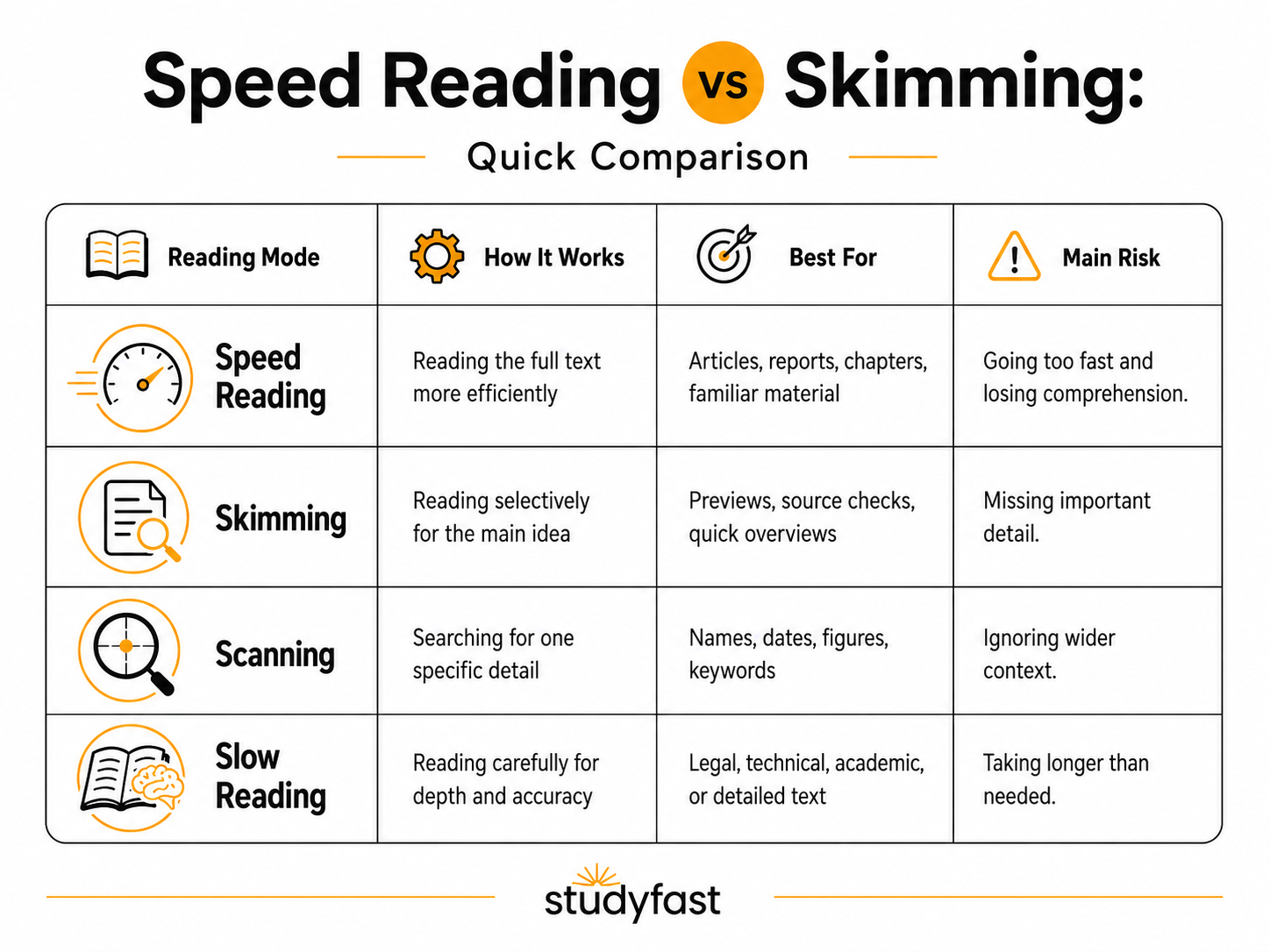
Speed reading is the practice of moving through a full text more efficiently while keeping enough comprehension to make the reading useful.
The key point is that speed reading still tries to follow the whole text. You are not jumping around for highlights or skipping sections on purpose. You are trying to move through the material with better pace, focus, and comprehension.
Speed reading works best when the text is suitable for faster reading. Familiar topics, general articles, reports, and straightforward non-fiction are usually easier to read at a higher pace than dense academic, legal, or technical material. If you want to understand realistic reading speed ranges, our guide to what makes a good reading speed explains useful WPM benchmarks.
For the broader overview of how it works, read our guide on what speed reading is.
{{EMBED}}
Skimming is selective reading.
You are not trying to process the whole text. You are moving through it to understand the main structure, key points, and general direction.
A typical skim may include reading the title, introduction, headings, subheadings, first sentence of each section, conclusion, bold text, bullet points, or visual signals. The goal is not full comprehension. The goal is orientation.
Skimming is useful when you want to know what something is about, whether it is worth reading properly, or which parts deserve more attention.
Skimming deliberately trades detail for speed. That is the point of it.
The difference between speed reading and skimming comes down to purpose and depth.
Speed reading is for situations where the full content still matters. You want to understand the text, but you want to move through it more efficiently.
Skimming is for situations where the full content does not matter yet. You want a summary, a first impression, or a quick decision about whether the text is worth deeper attention.
This also changes what you remember afterwards.
After speed reading, you should be able to explain the main argument and most important supporting points. After skimming, you may understand the topic and structure, but you should expect gaps in the detail.
Neither method is better in every situation. They are different tools.
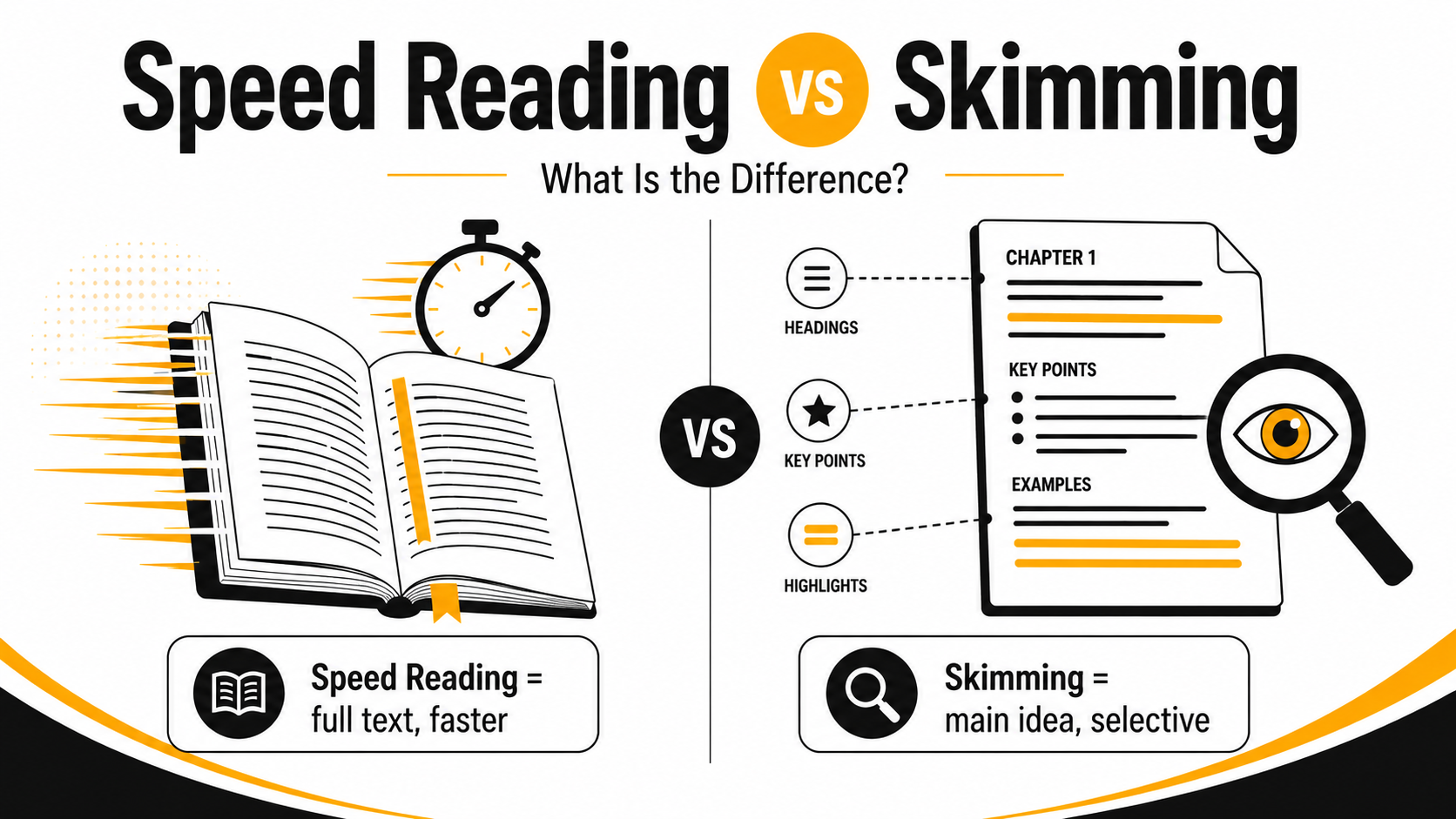
Speed reading makes more sense when you need the full content of a text.
Use speed reading when you are reading a report where each section matters, working through a non-fiction chapter, reviewing study material, or reading an article you need to understand properly.
It also works well when the topic is familiar. If you already know the vocabulary and background, your brain has more room to increase pace without losing the meaning.
Speed reading is not ideal when every word matters. If the text is legal, technical, academic, medical, or emotionally nuanced, slower reading may be safer.
For practical methods that support faster reading, read our guide on which techniques help increase reading speed.
Skimming makes more sense when you only need an overview.
Use skimming when you are checking whether an article is relevant, previewing a chapter before reading it fully, filtering search results, reviewing newsletters, scanning reports, or deciding which sources deserve more time.
Skimming is also useful before a full read. Looking at headings, opening lines, summaries, and structure gives your brain a map of the text. That can make the later reading more focused.
In this case, skimming and speed reading are not competing methods. Skimming helps you decide where to spend your full attention.
In real reading, skimming and speed reading often work best together.
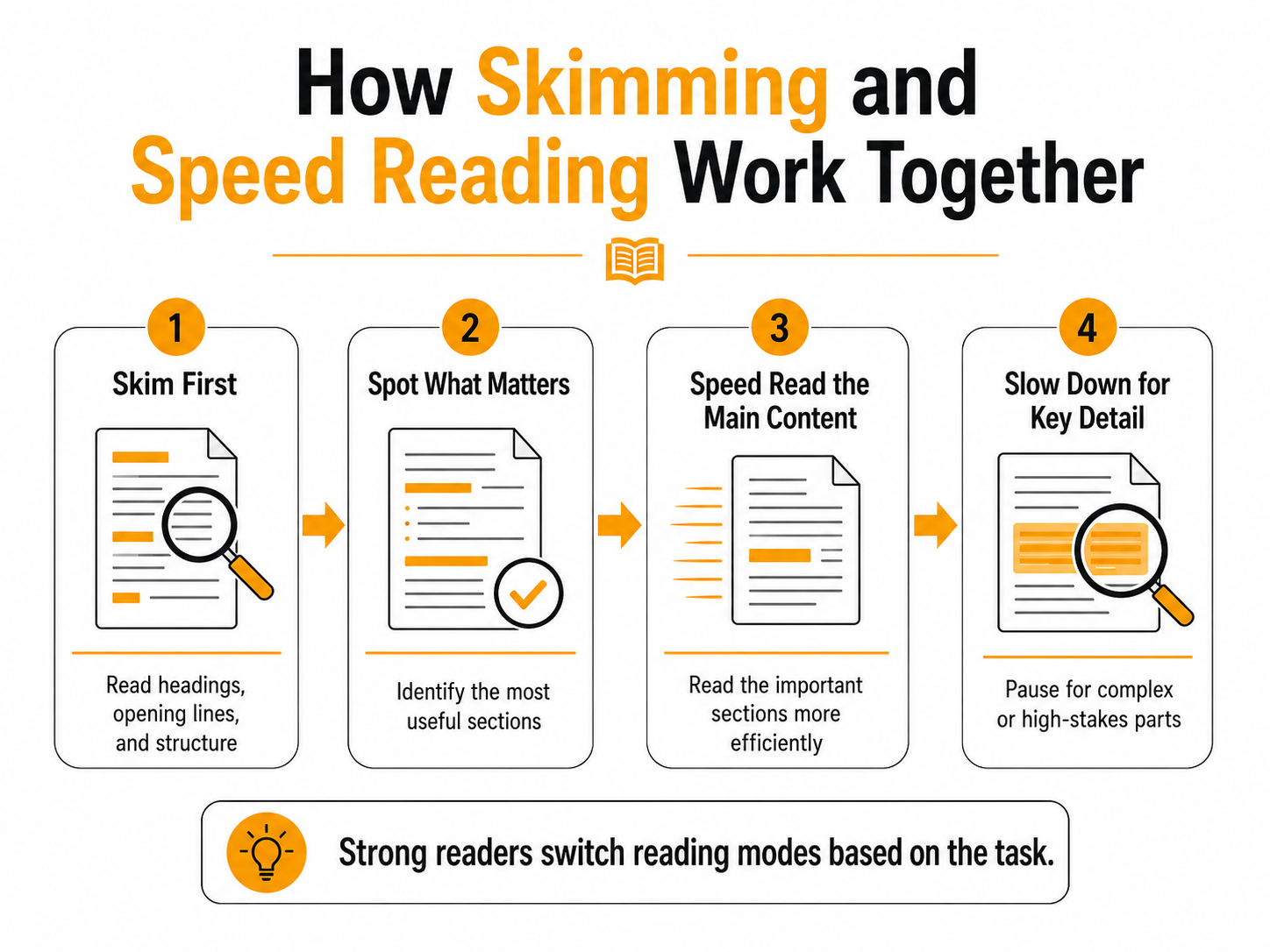
You might skim a long article first to check the headings, structure, and key points. If it looks useful, you can then speed read the sections that need fuller attention. If one section contains important detail, you may slow down further for that part.
This is especially useful for students reviewing chapters, professionals checking reports, or anyone sorting through a lot of material before deciding what deserves a full read.
The best readers do not use one method all the time. They shift between reading modes based on the task.
People confuse speed reading and skimming because both look fast from the outside.
Both involve moving through text more quickly than a careful read. Both can help when there is too much to read. Both are often described as “reading faster.”
The difference is what happens inside the reading task.
A reader who has skimmed a text may be able to summarise the topic and identify the main points. A reader who has speed read the text should have a fuller understanding of the content.
Some marketing around speed reading has also blurred the difference. Claims about reading a whole book in minutes with full retention often describe structured skimming, not genuine full-text comprehension. For a realistic look at these claims, read our guide on whether speed reading actually works.
The easiest way to tell the difference is to test what you understood afterwards.
The biggest mistake is skimming when real understanding is needed. A legal document, technical guide, exam chapter, or complex argument usually needs more than a quick overview.
The second mistake is trying to speed read before previewing. A short skim of headings, opening lines, and structure can make the full read easier.
Another mistake is thinking fast eye movement means useful reading. Whether you skim or speed read, the method only works when it matches the task.
The real issue is not choosing one method over the other. It is using the wrong mode for the wrong reading job.
Ask one question before you start reading:
How much of this text do I actually need?
If you need the full content, use speed reading.
If you only need the main idea, skim it.
If you need one detail, scan it.
If exact meaning matters, slow down.
This simple decision saves time because you stop treating every text the same way.
Speed reading and skimming are related, but they are not the same method.
Speed reading aims for efficient full-text understanding. Skimming aims for a fast selective overview.
The better choice depends on what you need from the text in front of you. If the full content matters, speed reading is the better option. If you only need the main idea or a quick relevance check, skimming is enough.
The strongest readers choose the mode before they start, instead of treating every text the same way.
If you want to build better reading judgement, StudyFast’s Speed Reading Mastery course helps you practise speed reading, skimming, comprehension checks, and pace control so you know which reading mode to use and when.
No. Speed reading aims to process the full text more efficiently, while skimming focuses on getting the main idea or key points without reading everything.
Neither is always better. Speed reading is better when you need fuller understanding. Skimming is better when you only need an overview or quick relevance check.
Yes, but it is selective reading. It can help you understand the main idea, but it should not be used when full comprehension is needed.
Skimming does not directly improve full reading speed, but it can make a later full read more efficient by giving you a structure before you begin.
Skim when you need a quick overview, want to preview a text, or are deciding whether something is worth reading in full.
Usually, yes. Speed reading is meant to keep fuller understanding, while skimming accepts less detail in exchange for speed.
Yes. A strong approach is to skim first for structure, then speed read the sections that deserve fuller attention.